….This is my first post since the start of the year and I guess most of you will have now fully recovered from all the excesses and celebrations and, despite all the rain, be well into the delights and discoveries of 2014, it certainly seems that way when reading all of your excellent posts. The main reason that I’ve not done a post till now is due to a large dose of apathy brought on by starting the year off with a mega cold/flu(?) that lasted from Boxing day through the most of the first three weeks of January. Then for the last couple of weeks it’s been a matter of finding the time, there seems to have been lots of those little important jobs that couldn’t be left any longer and needed to be done. The third reason/excuse is that, although I’ve been out and about on a few occasions (most times with Keith), I’ve not managed to take many decent photographs.
So, after all of the excuses here’s a few almost half decent images!
This first one was taken on New Years Day when Keith and I, after visiting RSPB Titchwell in Norfolk, went to the nearby Holkham Nature Reserve. The day day had turned cold and wet with a steady downpour, it wasn’t doing my cold any good! Little did we expect to find this many people out in the cold and the rain, the road is about a mile long, there were so many cars and people that we had difficulty finding anywhere to park the car! What’s it like in the Summer??
At last I've managed to get around to sorting through, and processing, some of the photographs that I've taken over the last few months. It's one of those jobs that I don't much enjoy, but one that reluctantly has to be done!
So, here's a few that I thought were worth sharing....
Black-Headed Gull on a windswept Titchwell beach 5-9-12
I'm back!!...well I've never been away really. I've just not
posted for a while due to various reasons, lack of time, lack of inspiration or,
more to the point, I guess it's just been down to shear laziness on my part!! Although you'll be pleased to know that I haven't
forgotten you all and I've been keeping up to date with reading all of your
blogs. (sorry for the lack of comments!!).
~~~~~~~~~~~~~~~
This is the first in
a series of three posts (not many words of wisdom just a selection of images
that I hope you will enjoy) each one dedicated to a different location that
I've had the pleasure of visiting since the beginning of the month.
The first day of February dawned cold and frosty and at
around 5.30 am I arrived atKeith's house on the start of our 200+ mile round
trip to the RSPB's reserve at Titchwell MarshinNorfolk. We arrived just after
8am, after experiencing a beautiful red sunrise during the journey, to a cold
sunny blue sky morning. It looked like being a good day weather wise, little
did we know that out on the reserve a strong bitterly (and I mean BITTERLY !!)
cold Easterly wind was blowing directly from Siberia!!
After a cup of coffee and some sandwiches (thanks Keith) in
the car park and a photo session with the numerous Robins that soon appeared to
greet us, they're well fed I think and hence quite confiding, we set of on our
walk around the reserve.
Around by the back of the back of the visitor centre Keith
soon spied a group of Redpoll feeding high up in some Alder trees and it was
not long before he had spotted that they were not only Lesser Redpolls but also Common, or Mealy,
Redpolls, and then he exclaims "there!, look!, that one's much lighter
than the others, I reckon that's an Arctic Redpoll" And sure enough once
the visitor centre was open it was confirmed by the staff and the sightings
book that it was indeed a Coues's Arctic Redpoll! So it looked like we were off
to good start, and within minutes of leaving the car!
Common Redpoll (I think!)
As soon as we left the cover of the trees we felt the full
force of the cold wind which made it very difficult to hold our bino's and
cameras steady and as most birds were at a distance picture taking opportunities
were mostly curtailed to 'fly byes'.
Brent Geese
Greylag Geese
Pintail (male)
Shelduck (male)
Black - Tailed Godwit
Grey Plover
We had pre booked a guided walk (highly recommended, and
free to RSPB members) for 12.30pm so, after more coffee and sandwiches, we met
up with our guide, David Pelling, for a very enjoyable and informative tour were he explained all about the history
and objectives of the reserve as well as pointing out some of the birds that we
had missed previously!
So, after around 8 hours of excellent birding (apart from
the wind, that is!) and a count of 63 different species of bird it was time to
set off on the two and a half hour journey for home.
Arne is better known for the thousands of wading birds that can be seen feeding on the mud flats during the winter months, so not surprisingly at the end of July birdlife was a little on the sparse side.I did however manage to clock up a count of 66 different species including a least five new year ticks and one new lifer (more later)
With the weather sometimes on the dark and damp side!! photographing the smaller birds proved to be near on impossible. A few of the larger species however did brave the elements for a couple of photo sessions.
There were quite a few Shelducks dotted around the reedbeds and mudflats, mostly in pairs, some with youngsters in tow, some that appeared to be still sitting on nests and some vigorously defending their territoryfrom anything that came close!
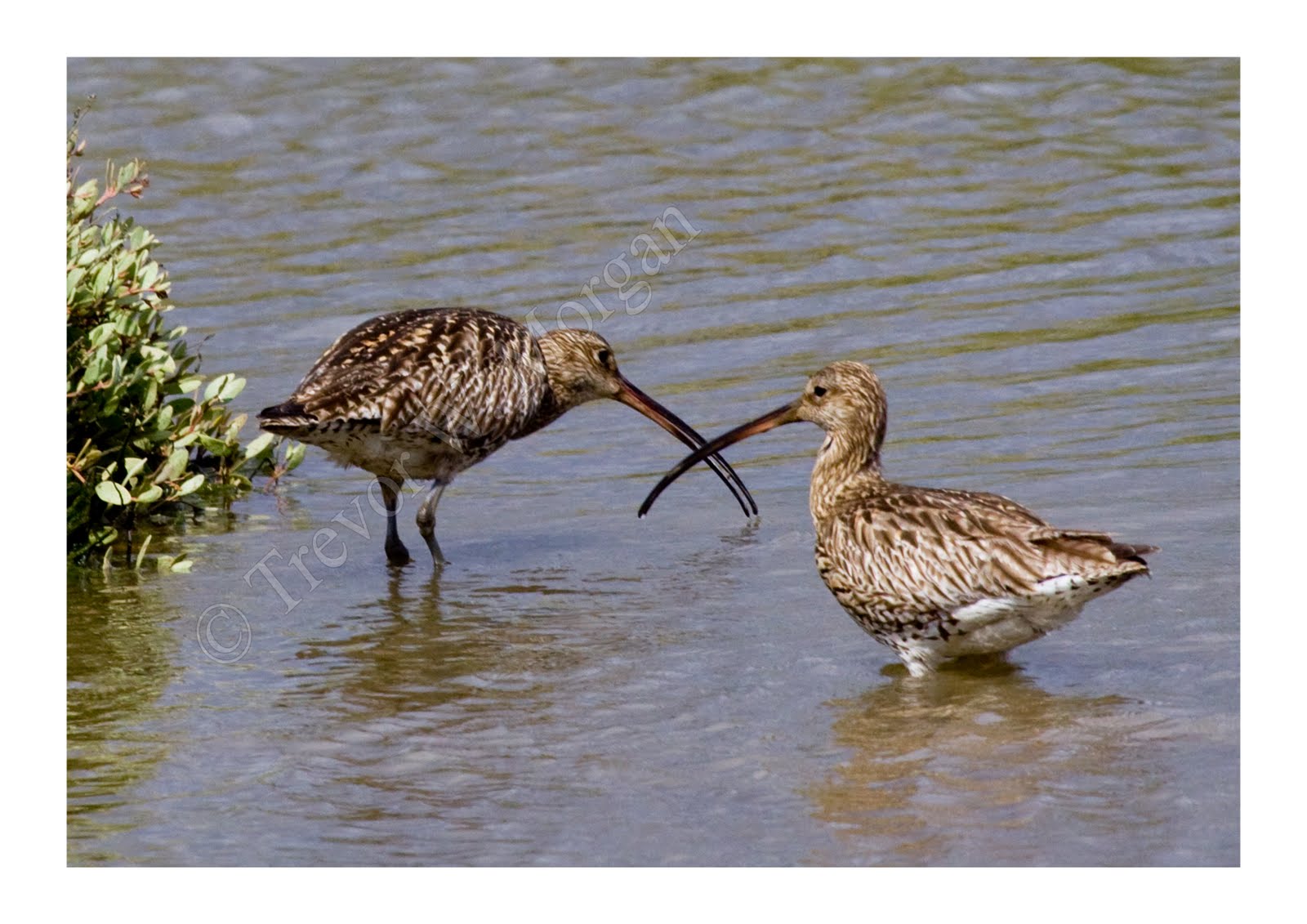
There was also a large population of Curlew.
And the moral here is........
..........when you take a bath be careful not to get water in your ear!
Also in evidence was a group of Black-Tailed Godwitsthat seemed to alternate between feeding on the mud to flying around for a couple of circuits before settling back down to feed again.
Half a dozen or so Little Egrets were dotted aroundon most daysbut seemed to constantly get harried from place to place by the Black-Headed Gulls and the Shelducks.
I spotted this resting Mallard on one of the small ponds located in the wooded area of the reserve.
The highlight of the week was going on the RSPB organised walk to see the Nightjars (the lifer) where we were fortunate enough to see four flying birds (3 males and 1 female) and to hear at least four churring males. To hear these birds churring in the twilight was an amazing, if rather eerie, experience (if you ever have the chance , take it!) the walk leader told us that the best way to appreciate the birds call was to cup our ears with our hands and face the source of the sound. Although not thinking about it at the time it must have been a comical sight to see, 30 plus people standing on the heath land in the gathering gloom with their hands cupped to their ears all staring at a lone tree!!
Although the light was fading fast I did manage to get a couple of record shots just to prove that I did actually see a Nightjar.