Saturday, 17 September 2011

AN AWAY DAY TO NORTHAMPTONSHIRE


Last Thursday morning (15th September) broke with a beautiful crimson red sunrise, and after a cool night, a few mist patches started to fill the hollows in the surrounding countryside.
It was 6am as Keith, from holdingmoments , and myself set off for a visit to Pitsford Reservoir near Northampton.

We arrived at about 6.45am and after buying our permits at the self service hut by the main gate (£5 well spent, as it turned out) we set off along the causeway which carries the road between the A43 and Brixworth and separates the wildlife reserve from the boating and leisure part of the reservoir.

Sunrise

We could see in the distance across the water large rafts of Coot, Mallard and Gulls and on the water's edge below the causeway  Pied and Yellow Wagtails flitted up and down accompanied by a couple of Goldfinches. Keith then spotted, cruising back and forth across the water what we later identified as a juvenile Black Tern (a lifer for me).

Black Tern (juv.)


Black Tern (juv.)

On through the gate that leads to the pathway and a 7 mile walk around the reserve and it's nine hides. At the first hide we were scanning over  a large (very!) raft of Tufted Duck mixed with numerous Pochard when all of a sudden they all took to the air in a mass of beating wings and were gone, spooked  by an Osprey maybe we thought, but then coming into view from behind the hide.......  

The Culprit!


Along the trail to the next hide we encountered a large flock of Meadow Pipits  a few of which kindly posed for their portraits. 

Meadow Pipit


The chill morning had now given way to a pleasantly warm day as we made our way around to the other hides through various types of woodland and grassland areas and on the way passing a couple of ringing sites with their associated mist nets. All the hides afforded good views across the water (although the birdlife was a little distant) 

A Grey Heron wondering if it had come to the right party!

We also encountered a few butterflies, mainly  Speckled Wood  with the odd 'White' and a single Comma......

Speckled Wood

Comma with Ladybird

.....and a few Dragonflies

Ruddy Darter (male)

Ruddy Darter (female)

Migrant Hawker (male)


In an adjacent field a farmer was busy kicking up a dust storm.


After about 7 hours we finally arrived back at the car where, after driving down to the lay-by on the causeway, we had  a much needed cup of coffee and a sandwich.
 Here once again Keith came up trumps and found what we later confirmed as a Yellow-legged Gull on a spit off mud not more than 200yards from where we were parked, another lifer!

Yellow-legged Gull

Comparison of between a Lesser Black-Backed Gull on the left and a Yellow-legged Gull on the right

So,  perfect weather, a gentle stroll and with a count of 58 birds (plus two or three maybe's / probably's ) it turned out to be an excellent  days birding.


Sunday, 11 September 2011

HOPPERS


I've just managed to find a little time to sort through some of the photographs that I've taken over the last few months and decided that I had enough to do this post on .....Grasshoppers.

There are around 8,500 species of Grasshopper worldwide, of which only 30 are resident in the U.K. 

Here are a few!


 The Common Green Grasshopper  (omocestus viridulus)

As the name suggests this grasshopper can be found  throughout the U.K. from July to October, where its preferred habitat is lush grassland.  The female is always green on top but otherwise they can be any combination of  brown, grey or green. The song is a fluctuating hiss lasting for between 10 to 20 seconds, rising to full volume about half way through before ending abruptly.

 Female

This male I've called "Pogo"......


.....because if you turn him around he's only got one hind leg!
 However it didn't seem to hamper his jumping ability as he was soon off and away!

And I've got to admit that I didn't notice his missing appendage untill I got home and downloaded the photographs from the camera!


The Meadow Grasshopper (chorthippus parallelus) is a flightless species with short forewings and no hindwings. Common throughout the U.K. this grasshopper is usually green with brown wings, but occasionally a completely green or brown specimen can be found, and sometimes, the female can show a distinct pink hue.

The song is said to resemble the sound of a sewing machine running in 2-3 second bursts, repeated every 5-15 seconds. It can be found in, mostly damp, areas of grassland from June to October.

Male

Male


Female

Copulating  Pair

The Field Grasshopper  (chorthippus brunnes)   found throughout the U.K. from June to October this dry grassland loving species can be green, grey but more usually brown in colour. It's song is a short series of 6 to 10 chirps likened to time signal pips.


And finally......a Bush Cricket.  These insects are distinguished from Grasshoppers  by their hair like antennae (often much longer than their body). The female has a blade like ovipositor which in some cases is longer than her body.


Roesel's Bush Cricket  (metrioptera roeselii)  Mostly found in the southern part of the U.K. in lush grassland between June and November. Although normally short winged, long winged forms sometime occur during hot summers. The song sounds like long bursts of a dentist's drill.


Thursday, 8 September 2011

GETTING DOWN AND DIRTY


It's that time of year when the days are getting shorter, the weather is getting worse!  the wild flowers are starting to fade, the butterflies have all but disappeared and the birds are flying away (we still have passage migrants to look out for, of course).  Now  is the time for us photographers to once again get our knees and elbows wet and muddy down amongst the leaf litter. Yes, it's FUNGI TIME.
Yesterday was my first fungi photo foray (that's a lot of f's) of the year. I went to a good fungi spotting location,  the large mixed woodland of the Ashridge Estate, which straddles the Herts/Bucks border.
I spent about four hours wandering the woods and found reasonable amounts of  'specimens'  to photograph. One area however was pretty much devoid of any decent photo opportunities and I soon realised why, two women busily picking every edible fungi in sight! after a nod of introduction we got chatting and they turned out to be an Italian mother and daughter "up from London" (about 20 miles away at its nearest) for the day  specifically to collect "mushrooms", which they do two or three times a year, and judging by their basket which was overflowing with Boletes and Puffballs they were having a very successful day!  

 With hindsight  I should have taken a photograph of their basket, doh!


Here  are a few(!) images from 'my basket'.


Lilac Bonnet  (mycena pura)

Yellow Swamp Brittlegill  (russula claroflava)

Bitter Beech Bolete  (boletus calopus)

Common Funnel  (clitocybe gibba)

Sepia Bolete  (boletus porosporus)

Bicoloured Deceiver  (laccaria bicolor)

Purple Jellydisc  (ascocoryne sarcoides)

Common Puffball  (lycoperdon perlatum)

Orange Milkcap  (lactarious aurantiacus)

Clustered toughshank  (collybia confluens)

Cep or Penny Bun  (boletus edulis)


 I've given some I D's but they're by no means 100% certain. please feel free to correct me where needed.  


Saturday, 3 September 2011

CHANCE ENCOUNTER


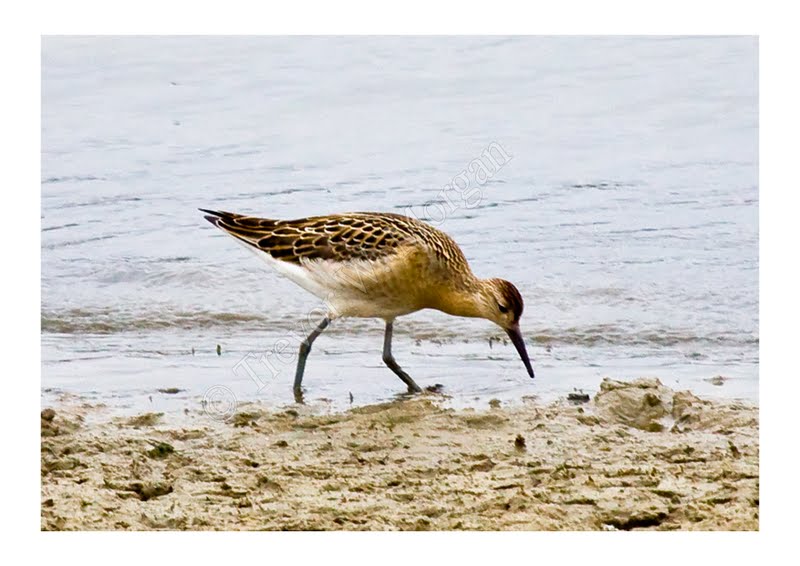
A couple of days ago whilst out driving close to Northampton I decided to have a quick look at Pitsford Reservoir. I stopped in one of the lay byes on top of the causeway where you get a good view over the water and almost immediately a group of 5 juvenile Ruff flew in and landed at the water's edge, about 200yds. from where I was standing, and proceeded to have a wash and brush up. With the ablutions' over  they began to move towards me, busily probing the mud as they moved along for about 50yds. or so before flying back to their starting place and working their way back along the water's edge once again. They repeated this over and over again for the whole of the thirty to forty minutes that I spent there.

A very interesting chance encounter.


Other birds noted :- 
large groups of Lapwing, Coot and Mallard
patrolling Common Tern,
Dunlin (1),
Half a dozen or so GC Grebe,
B H Gulls,
Herring Gull (3),
L B B Gull (1),
a few Gadwall,
and across the road, chattering away in the top of a tree, a large charm of Goldfinch.

Not a bad count for standing in one place for just over half an hour.